





72
From schools to universities.. in numbers | Education in Qatar: “Excellence Builds Generations”
April 02, 2023, 10:53 a.m
Follow us:
alsharq
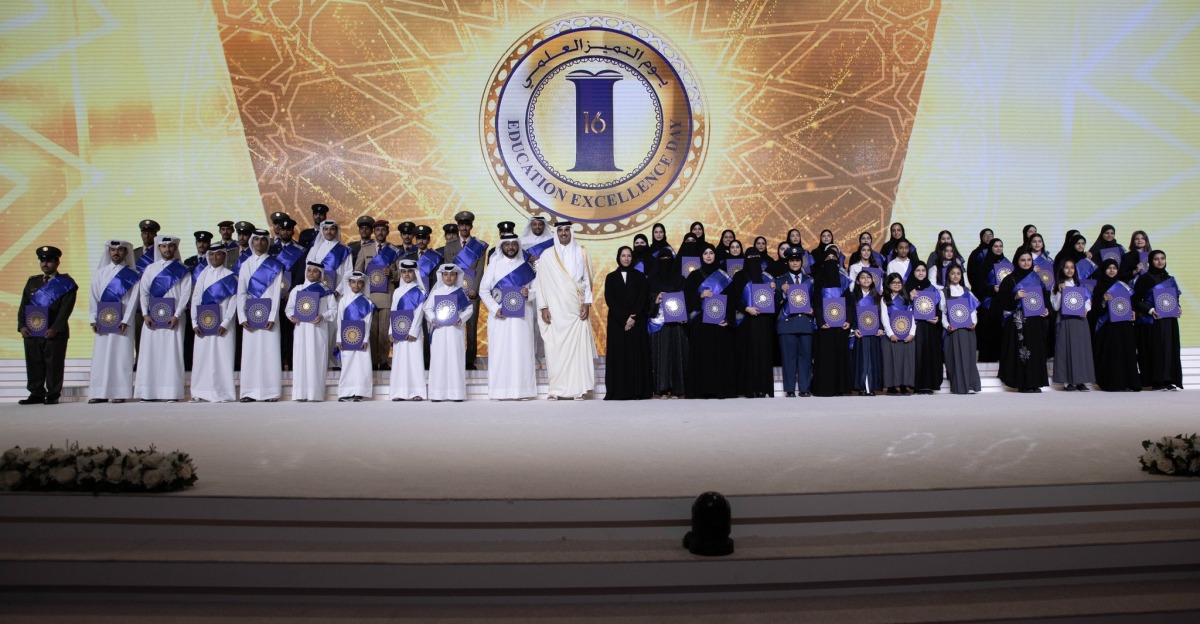
His Highness is keen to honor the distinguished annually
A+
A-
Education in Qatarschoolsuniversities
Doha – the site of the East
“We cannot accomplish the renaissance and bring our homeland to the ranks of the developed countries if we do not pay the utmost attention to the human being, for he is the pillar of any renaissance.. And urbanization is not measured by buildings and facilities only, but rather by the ability of human beings to plan, build and maintain them, and the schools that teach them, and the universities that graduate them, and the quality of education and culture prevailing values and morals.” Words spoken by His Highness Sheikh Tamim bin Hamad Al Thani, the Emir of the country, years ago, at the opening of the forty-eighth session of the Shura Council, summarize his keenness and interest in building human beings and providing education, believing in its importance in the progress of societies and countries and in strengthening their position globally.
Read also
alsharq
The first seminar of the Ramadan Council monitors the stages of the education renaissance in Qatar
alsharq
In the video.. The reception of a school principal in Doha for students sparks interaction on communication sites
alsharq
Between parents, the Ministry of Education, and private school owners… Who is responsible for the weakness of the Arabic language?
His Highness’s keenness to include, under his generous patronage, the Scientific Excellence Day Award ceremony every year and to honor those who are scientifically distinguished is evidence of His Highness’s appreciation for their role in the renaissance of the state and society, which was confirmed by His Highness in his message to the award winners of the 16th session of the award, telling them through his Twitter account on March 1 The past said, “Qatar is proud of you and thrives on your determination and diligence.”
Her Excellency Mrs. Buthaina bint Ali Jabr Al-Nuaimi, Minister of Education and Higher Education, affirmed that the keenness of His Highness Sheikh Tamim bin Hamad Al Thani, the Emir of the country – may God protect and preserve him – to honor the distinguished and share with his sons and daughters their joy in this achievement, is nothing but evidence of the faith of His Highness That education is the strategic choice for sustainable development, and that countries are built with the help of their educated children, who will be entrusted with contributing to their construction.

The Minister of Education affirms that despite reaching an advanced educational system, development will not stop at this point, but rather achievement, excellence and quality will continue, so that the outputs of education in Qatar are qualitative outputs that achieve competitiveness, as countries are built with the help of their educated children who are able to compete regionally and internationally. Her Excellency said at the first educational meeting organized by the Ministry under the slogan “The Torch of Learning” during August 2022: “We are in a continuous effort to develop our educational system, through continuous evaluation and objective diagnosis, based on reality and its indicators, to enhance the strengths of our educational system, and to develop and improve aspects that need to be developed.
Education in the 2023 budget
The numbers and allocations of the state’s general budget 2023 highlight the continued keenness of the wise leadership to continue supporting education in all its stages and investing in it by increasing its allocations for developing a number of new schools and improving the existing ones, as spending on it amounts to 18.0 billion riyals compared to 17.8 billion riyals in the 2022 budget, i.e. 9% of the total budget.
4 axes for the development of education over the next 8 years
Last August, Her Excellency the Minister of Education and Higher Education announced 4 main axes for the development of the educational system in Qatar over the next eight years, in order to achieve Qatar Vision 2030. She also announced 4 initiatives for the new academic year 2022/2023.
The first axis is the students, where Her Excellency the Minister of Education said: “We aspire that our students will be lifelong learners, armed with knowledge, and characterized by flexibility, passion, curiosity and creativity, by enhancing their achievements and ensuring their continuity, equipping them with twenty-first century skills, and instilling in them the values of the Qatari identity, The second axis is the teachers axis, in which we aspire for teachers to be role models that provide students with inspiration and motivation to develop themselves and strive to achieve excellence, by targeting and attracting distinguished Qatari teachers and school leaders, training and developing them, and attracting international competencies….” The third is the focus of schools.In it, we aspire for our schools to become beacons of learning, safe and advanced, and rich and attractive environments, through developing early education services and raising enrollment rates, building a comprehensive educational experience, aiming to improve the quality of school life for students, designing integrated and flexible paths for general and technical education for people with disabilities, and providing Support for each school according to its needs and requirements.” As for the fourth axis, it focuses on the ministry, “in which we aspire to transform it into a center that manufactures and develops innovations and capabilities, through developing institutional capabilities, while ensuring the highest level of transparency and accountability, and building partnerships with families, and the public and private sectors. ..”..”.In it, we aspire to transform it into a center that manufactures and develops innovations and capabilities, through the development of institutional capabilities, while ensuring the highest level of transparency and accountability, and building partnerships with families, and the public and private sectors….”In it, we aspire to transform it into a center that manufactures and develops innovations and capabilities, through the development of institutional capabilities, while ensuring the highest level of transparency and accountability, and building partnerships with families, and the public and private sectors….”
And “The State of Qatar is proud to transform its National Vision 2030 for education into a tangible reality, as the Ministry of Education and Higher Education is working to provide all means for everyone to obtain high-quality education and make this a top priority,” as the number of public schools increased from 178 to 209 schools, The number of students increased from 96,000 to 121,000, according to the Government Communications Office via Twitter on January 12.
The State of Qatar believes that education is the basis of renaissance and one of the factors of human development, which is one of the pillars of Qatar Vision 2030. Therefore, it has given this sector a great priority, as the Ministry of Education and Higher Education has devoted its efforts to achieving general strategies, developing educational policies, working on developing curricula, providing the necessary support to teachers and raising their capabilities. In various fields, in addition to setting a systematic vision to develop the student’s level and make technology an integral part of the education system.
500 public and private schools:
The number of students in schools is about 350,000 distributed over more than 500 public and private schools, in addition to higher education students, whether on scholarship abroad, or in higher education institutions at home. There are 34 institutions and universities at home that offer 378 specialized academic programs, and more than 33 research and scientific centers and institutions concerned with the environment, energy, medicine, entrepreneurship, computing, social, human and educational studies, technological innovations, and sustainable development, which are areas that serve the knowledge economy and the country’s developmental orientations in the present and future, according to the statements of the Minister of Education in the first educational meeting Last August, according to the Qatar News Agency, QNA.
Maha Al-Ruwaili, Assistant Undersecretary for Educational Affairs at the Ministry of Education and Higher Education, explains that the ministry sought to establish firm rules for the development of government education and transform schools into an updated model of education based on sustainability and twenty-first century skills, in response to what was formulated by the national vision.
Develop secondary pathways
The Educational Affairs Sector has developed multiple tracks for students in the secondary education stage, which meet the needs of all students, at all levels, namely the scientific track, the arts and humanities track, and the technological track.
The percentage of students in the scientific and technological tracks reached 51.3% in the academic year 2022/2023. Cooperation has also been made with the Qatar Career Development Center in Qatar Foundation to implement a global electronic program for academic and vocational guidance for all government school students in grades nine to eleven.
Interest in technical education
The Ministry is interested in developing technical, vocational and specialized education. There are currently two technical schools in government education in the State of Qatar, one for boys and the other for girls. There are also two schools for banking sciences and business administration. As for specialized schools, there is the Religious Preparatory Secondary Institute for Boys, which is a specialized government school in Arabic language sciences and legal sciences.
The Qatar School of Science and Technology was established and inaugurated for Qatari students who excel scientifically, which follows an integrated scientific approach STEM supporting technological skills.
– 8 science and technology laboratories have been established in the new public schools that opened this year, and 8 specialized engineers have been appointed to run the laboratories and teach students alongside teachers.
Promote digital education
Maha Al-Ruwaili said: The national strategy for e-learning was launched, which included a framework for the governance of the e-learning system at the national level, in addition to a set of initiatives that would support the educational system and enhance the quality of education. The learning management system “Qatar Education” has also been updated and enhanced with new features that serve all public schools from grade three to grade twelve.
In an advanced step, cybersecurity educational curricula have been launched. And the issuance of 50 educational videos on cybersecurity educational curricula, in cooperation with the National Agency for Cybersecurity, targeting students at all educational levels.
Education for people with special needs
And based on the belief of the State of Qatar in the right of everyone to obtain quality education as part of their right to life, regardless of their abilities, people with special needs have a large place in the country’s priorities through the development of specialized programs that meet their needs through a set of complementary and cooperative approaches to enhance the teaching and learning processes, in addition to To educational programs for students that suit the different needs of people with special needs, as well as blended education services for autistic students and those with intellectual disabilities.
Prior to the start of the 2022-2023 academic year, the Ministry of Education opened 5 new schools for boys and girls for the preparatory and secondary levels, with the capacity of each school reaching 786 students, of whom 36 have special needs, distributed over 6 classes in each school, while the rest are 750. students over 30 semesters.
People with visual impairment
The Ministry of Education and Higher Education provides special services for students with visual impairments according to the case of each student, after evaluating them at the Roaa Center for Consultation and Support, to determine the level of their actual performance and determine what they need and then integrate them with their peers from ordinary students in regular classes, while providing arrangements and facilities for The level of the classroom environment, and the level of teaching, in order to achieve equal learning opportunities for them, such as using their own enlarging devices, and printing the curricula in a larger size.
Blind and severely visually impaired students are integrated into 4 public schools specialized in integrating visual disabilities, two of which are in the preparatory stage, and the same in the secondary stage for boys and girls, so that students are trained and taught to read and write in Braille, and training in mobility, recognition and guidance using the white cane, in partnership with Al Noor Institute for the Blind.
The Ministry cooperates with local and international centers specialized in assistive technology, such as the Mada Center, which provides many technological means for blind students, such as the obtecon, which is an electronic device that converts written material into words and prominent letters, as well as the magnifier, which is a magnifying glass to help the visually impaired. Sight over reading, in addition to many programs and applications for blind students, through teachers in all disciplines who are fluent in Braille, in addition to the family education services provided by these schools to parents of students with visual disabilities, through partnership and cooperation with social institutions such as the Social Cultural Center for the blind.
Students with visual disabilities, after graduating from secondary school, obtain a certificate that qualifies them to enroll in universities inside and outside the country.
In order to ensure the provision of integrated special education services for students with intellectual disabilities and autism, kindergartens and specialized schools for people with disabilities have been established, which is the Al-Hidaya Schools chain, through which intensive educational services and programs are provided that qualify them for later integration into public schools, according to Maha Al-Ruwaili, Assistant Undersecretary for Educational Affairs at the Ministry of Education. Higher.
– This year 2022/2023, Al-Hedaya school for people with special needs was opened for boys / Al-Masila, which is combined (primary, preparatory, secondary), bringing the total number of the Al-Hedaya school chain to 6 school buildings and 2 kindergarten buildings, while the number of government integration schools for people with disabilities reached 70 schools.
This year, 264 male and female students with disabilities were enrolled in integration and specialized schools, with an increase of 32% over the previous academic year.
Qatar University.. the first institution of higher education
Since its establishment in 1977, Qatar University has been the foremost institution of higher education in the State of Qatar. Today, it occupies advanced positions among the universities of the world, and has turned into a leading regional center in academic and research excellence, and includes 11 colleges that offer multidisciplinary programs.
For the second year in a row, Qatar University achieved second place in the QS Quacquarelli Symonds rankings for Arab universities for the year 2023. Since 2018, Qatar University has jumped 5 places, rose four times, and has not provided any negative performance in this classification.
In the Caccarelli Symonds (QS) World University Rankings, Qatar University jumped from 224th place in 2022 to 208th in the 2023 rankings, effectively jumping 16 places.
The first private national university
Lusail University, which was established in 2020, is the first private national university in the State of Qatar. In line with its vision and strategic goals, the university provides distinguished educational opportunities through 15 academic specializations.
The university has succeeded in establishing strategic partnerships with several international bodies, including the United Nations Institute for Training and Research, the Sorbonne University and the University of Shippensburg, in addition to training students to compete in local and international labor markets, offering scholarships to local and international students, and promoting research and knowledge production.
Her Highness.. a prominent role in education and international appreciation
Speaking of education, we must point out the great role played by Her Highness Sheikha Moza bint Nasser, Chairperson of the Board of Directors of Qatar Foundation for Education, Science and Community Development, at the local, Arab, regional and global levels.
For many years, Her Highness Sheikha Moza bint Nasser presented many important initiatives in the field of education and youth and community development in Qatar and around the world, which were praised by many international organizations and bodies, especially the United Nations.
At the local level, Her Highness currently chairs the Board of Directors of the Qatar Foundation for Education, Science and Community Development, a private, non-profit organization established in 1995, known for its pioneering project “Education City”, which includes branches of several universities and prestigious international institutions working in the field of scientific research and economic development projects. social.
In 2012, Her Highness launched the “Education Above All” foundation, which is a global initiative that seeks to provide opportunities for a new life and real hope for poor and marginalized children, youth and women in poor and developing countries. This foundation works to implement its goals through a number of existing programs such as the program Educate a Child, the Education Protection in Conflict and Insecurity Program, the Al-Fakhoura Program, and the Reach Out to Asia Program, according to the Qatar Foundation website.
The United Nations adopts the proposal of Her Highness:
In May 2020, the United Nations General Assembly adopted a resolution to allocate September 9 as a “International Day to Protect Education from Attack,” a decision called for by Her Highness Sheikha Moza bint Nasser, Chairperson of the Board of Directors of the Education Above All Foundation and a member of the Defenders of Development Goals group. The United Nations Sustainable Conference, and led by the State of Qatar to mobilize international support in order to ensure accountability for the ongoing and deliberate attacks on education and armed violence suffered by children around the world.
HE Secretary-General of the United Nations Antonio Guterres and HE Director-General of the United Nations Educational, Scientific and Cultural Organization (UNESCO) Audrey Oslay expressed their thanks and appreciation for the contribution of Her Highness Sheikha Moza bint Nasser, who called for dedicating an annual day to protect education from attacks.
Teach for Qatar:
Teach For Qatar Foundation is dedicated to preparing the next generation of leaders in the education sector, seeking to contribute to the development of their careers, serving the community and achieving the Qatar National Vision 2030.
Her Excellency Sheikha Hind bint Hamad Al Thani established the Teach For Qatar Foundation with the aim of contributing to the realization of the Qatar National Vision 2030, through:
– Supporting the Qatari education sector through the “Path of Leaders” program, which qualifies graduates and professionals to join the teaching workforce.
Engaging in strategic partnerships with many actors, including the Ministry of Education and Higher Education, to bring about a positive and radical change in teaching methods in government schools in the country.
Motivate the next generation of Qataris to join the education sector through the “Be a Teacher” initiative, according to the Government Communications Office via Twitter on January 19, 2023.