








Appeals Court Allows Links to Payments Outside Apple App Store
BY PYMNTS | APRIL 24, 2023
|
Developers may soon be able to offer links enabling payments outside Apple’s App Store.
A United States appeals court upheld an earlier ruling in a case that said Apple can no longer prohibit such links, which developers want to use to avoid paying sales commissions to the tech giant, Reuters reported Monday (April 24).

The appeals court sided with Apple on nine other matters, however, including agreeing with an earlier ruling that Apple hasn’t violated antitrust laws.
These decisions were the latest in a case brought against Apple by Epic Games.
In a thread on Twitter, Epic Games Founder and CEO Tim Sweeney said that Apple prevailed at the appeals court with the finding that Epic didn’t prove its antitrust case.
“Fortunately, the court’s positive decision rejecting Apple’s anti-steering provisions frees iOS developers to send consumers to the web to do business with them directly there,” Sweeney added in the thread. “We’re working on next steps.”
Apple did not immediately reply to PYMNTS’ request for comment.
In a statement provided to Reuters, Apple said: “For the second time in two years, a federal court has ruled that Apple abides by antitrust laws at the state and federal levels. We respectfully disagree with the court’s ruling on the one remaining claim under state law and are considering further review.”
The legal war between Apple and Epic stretches back to 2020, when Apple removed the Epic game Fortnite from the App Store after Epic created a workaround to avoid paying the 30% fee on customers’ in-app purchases.
The case went to trial in May 2021, with the companies fighting over the App Store policies and whether Apple hinders competition.
At the appeals court, Epic sought to overturn a ruling that rejected much of its antitrust case against Apple’s App Store, saying the lower court judge had “erred” when determining the App Store’s results and restrictions didn’t violate antitrust law.
Following the ruling announced Monday regarding links to payments outside the App Store, Apple said it may appeal the decision. It has 14 days to file such an appeal, according to the Reuters report.
RECOMMENDED
Apple’s Entrance Into Savings Accounts May Cost Neobanks and Traditional FIs
Apple Reportedly Developing Wellness-Oriented Journaling App
Apple Opens Indian Stores as In-Country Sales Hit $6 Billion
Apple Unveils Savings Account for Apple Card Users
SEE MORE IN: APP DEVELOPERS, APP PAYMENTS, APP STORE, APPEALS COURT RULING, APPLE, NEWS, WHAT’S HOT
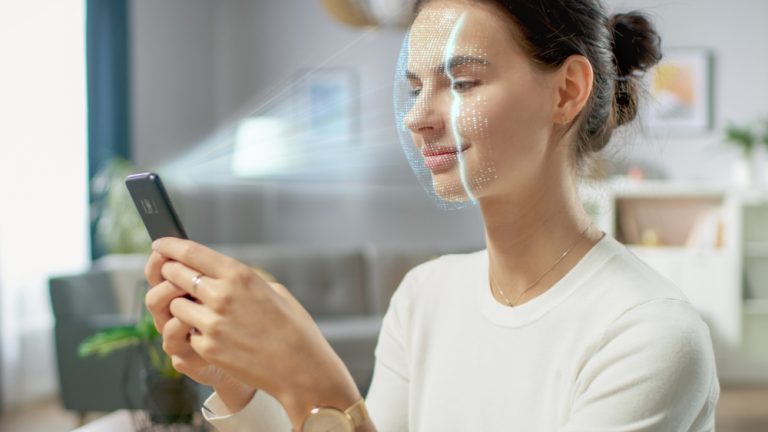
Multifactor Authentication May Be Bridge Between Biometrics, Passwords
BY PYMNTS | APRIL 24, 2023
|
Until more advanced security goes mainstream, an already accepted method may fill the gap.
Consumers are more security-savvy than ever, especially when it comes to fraud prevention in banking. They also have more choice in primary financial institutions (FIs) than ever, from traditional banks to full-on FinTechs — and may be willing to switch if their security and other needs go unmet.
Over one-third of banking customers want their FIs to offer more visible security measures requiring a user to act, such as entering a password or using biometric authentication for high-risk financial activities. Another 27% would like the same for routine transactions. While consumer preference may vary on methods to accomplish this, it’s clear that the long reign of passwords as the favored online identity authentication method may be ending. The array of preferred authentication method choice by consumers is illustrated in the PYMNTS collaboration with Entersekt, “Visible and Invisible Security: Perceptions in Digital Banking.”
Biometrics is far and away the favorite choice among surveyed consumers, with 52% citing the authentication method as their most preferred. However, despite biometrics’ promise as the next generation of authentication, its use is not yet widely adopted. However, the somewhat distant second most cited response, multifactor authentication (MFA), is now a commonly used protocol. It is also well-trusted, as 62% of those who chose MFA as their preferred authentication method did so because of its perceived stronger security. Given its rate of consumer acceptance and fraud-fighting abilities, both straddling between passwords and biometrics’ utility, MFA may be the natural “transitionary” protocol until biometrics is widely adopted.
In an interview with PYMNTS, senior director of operations for fraud tech at First Tech, Seth Rudin, explains how MFA fits into his organization’s greater security strategy. “We look at the full life cycle of an individual’s engagement with their financial institution by ensuring that our members have strong security hygiene, that they’re using the right kind of passwords, that they’ve got multifactor authentication options that suit their lifestyles and that we have the right kind of fraud [prevention] tools that provide the right kind of alerts that the member can engage with specifically.”
Passwords’ fraud-fighting ability has long faded and biometrics has not yet reached table-stakes acceptance levels. Until that transition is complete, MFA may be the authentication method to beat — for now.