







Paris 2024: Does hosting the Olympics boost the economy?
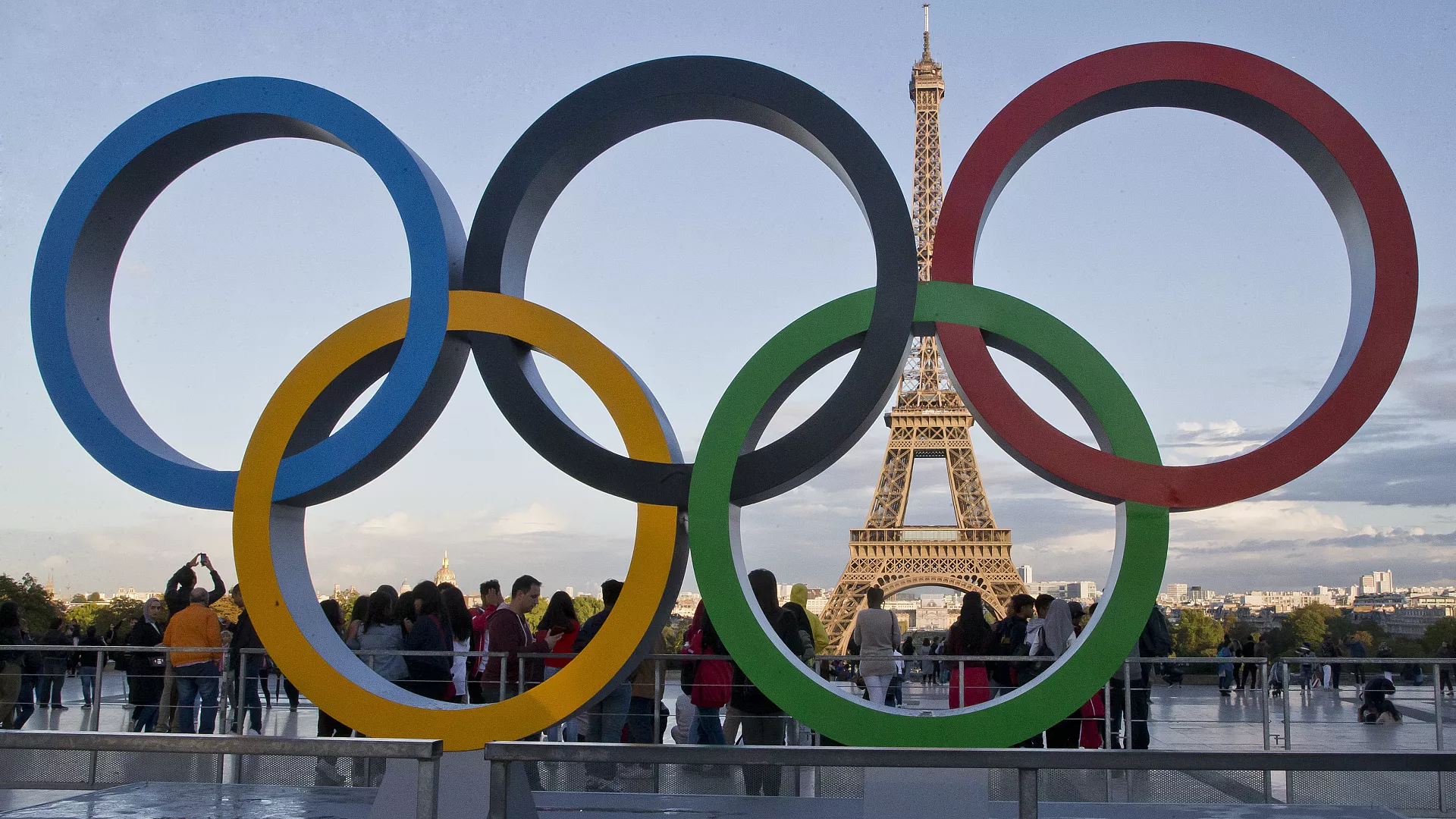
The Olympic rings are set up at Trocadero plaza that overlooks the Eiffel Tower in Paris on Sept. 14, 2017.
By Heloise Urvoy
Published on 31/01/2024 – 06:15
Share this article
Comments
As we approach the Paris 2024 Olympic and Paralympic Games, we’re looking into whether the mega sporting events really do bring an economic boost to the host city and country, or whether it costs more than it’s worth.
Many Parisians aren’t really happy about their city hosting this year’s summer Olympics.
Despite President Emmanuel Macron’s desire to turn the event into a “popular celebration”, the minimum €2,700 tickets to attend the opening ceremony and the several hundred euro cost to go and see almost any of the events may for once give the French a good reason to complain.

Nevertheless, many have been quick to point out the old adage that the Olympics should bring a much-needed boost to the French economy during times of inflation and a cost-of-living crisis, as tourists and investors descend upon the capital.
But with forecasts of the Games’ economic benefits being far from certain, Euronews Business decided to look at whether they will indeed be a healthy financial investment for Paris and France as a whole.
Rugby World Cup brings billions to the French economy
France faces four major economic challenges in 2024
Poor return on investment rate
Past Olympic Games tell us the event is more often than not a financial pit.
“This is because many hosts end up spending much money on specialised infrastructure that is of limited use after the event,” Martin Müller, professor of geography and sustainability at the University of Lausanne, told Euronews Business.
He found that continued maintenance of infrastructure from the 2014 Sochi Winter Olympics has represented a burden of over $1 billion (€920 million) per year ever since.
What Müller calls the “underestimation of costs and overpromising of benefits” results in host cities rarely breaking even. Profits have been proven possible in modern Olympics history, but fail to compare to the significance of the deficits.
The record profit Los Angeles scored in 1984 occurred under peculiar circumstances: the Californian city was the only bidder and therefore able to obtain looser requirements from the International Olympic Committee (IOC), including the right to use pre-existing infrastructure instead of building new ones.
A similar scenario played out recently when Paris and LA were the only cities left bidding for the Games.
“To avoid a replay of the situation in 1984, it [the IOC] awarded the two Olympics at the same time,” said Müller, with Paris being awarded the 2024 Games and LA the ones in 2028.
The true, astonishing price of hosting the Olympics indeed discourages many cities from bidding, especially seeing as even bidding itself proves expensive.
“Tokyo spent as much as $150 million on its failed 2016 bid, and about half that much for its successful 2020 bid,” explained James McBride and Melissa Manno from the Council on Foreign Relations (CFR). “Toronto decided it could not afford the $60 million it would have needed for a 2024 bid”, they added.
An over-powerful IOC?
Some experts point to the overly advantageous position of the IOC, which has the power to choose among the applying cities and impose conditions on infrastructure or ticketing that the host needs to respect and pay for – all while sharing little to none of the financial risks that cities face.
“The IOC could share a larger amount of international and TV and top sponsorship money”, said Professor Andrew Zimbalist, author of Circus Maximus: The Economic Gamble Behind Hosting the Olympics and the World Cup.
The IOC indeed brings in a significant amount thanks to its Olympic Broadcasting Services (OBS), which enjoys a monopoly on Olympic broadcasting standards, allowing it to dictate its conditions to other media. But those revenues aren’t shared with the host city’s organising committee, which ends up instead with a multi-billion dollar bill.
As reported by French newspaper Le Monde in January, the powerful OBS even obtained a temporary decree allowing it to avoid having to grant a weekly day off, as usually mandated by law, to the 8,000 people expected to work on broadcasting the Paris Olympics.
Experts have suggested different ways of scaling down the IOC’s power and its aversion to sharing the financial risks.
“The more interesting solution is to have one permanent venue for the summer and one for the winter games,” said Zimbalist.
But would such a major change be met with enthusiasm? Many see the Olympics as a way to garner and leverage soft power, and as an event that helps the host nation’s government to improve its domestic image.
Limited work opportunities
When politicians promote hosting the Olympics, they often bring up job opportunities, particularly in the construction and hospitality sectors.
The Paris 2024 organising committee claims that the event will be “a lever for boosting activity and employment”, thanks to “over 181,000 jobs mobilised”. It specified that this figure includes jobs specifically created for the occasion, and jobs that will be involved in the Olympics in some way, but already exist.
This means that the hoped trickle-down effect won’t be felt by all.
“The wages paid to a hotel’s desk clerks and room cleaners are likely to remain roughly unchanged,” explained Robert Baade and Victor Matheson in their 2016 study ‘Going for the Gold: The Economics of the Olympics’.
Indeed, in many cases, as “hotels (as well as chain restaurants, car rental agencies, airlines, and similar firms) are nationally or internationally owned, this increase in corporate profits doesn’t stick in the host city but instead leaves the area,” they explained.
To take place in the best conditions, Olympic committees also heavily rely on volunteers – 45,000 this summer in Paris – who are, by definition, not paid.
Volunteering may get you some perks, such as attending some of the competitions for free. However, a lack of salary means it won’t be easy to secure accommodation in Paris or its neighbouring suburbs, especially with the skyrocketing price of B&Bs and hotel rooms in that period.
Disruption to daily life
Between the metro ticket cost being temporarily raised to €4 to face the influx of tourists (it normally costs €2,15), and the Paris region president Valérie Pécresse advising locals to work from home for the Olympics’ duration, many intend to use some of their five weeks of paid time off to leave Paris in July and August.
For those who can’t escape the French capital, those two weeks when the Olympics are on, followed by another two for the Paralympics, might be a nightmare.
A video mapping is projected on the Arc de Triomphe to celebrate France’s entry into the Olympic year, during New Year celebrations in Paris, Sunday, Dec. 31, 2023.
A video mapping is projected on the Arc de Triomphe to celebrate France’s entry into the Olympic year, during New Year celebrations in Paris, Sunday, Dec. 31, 2023.Aurelien Morissard/Copyright 2023 The AP. All rights reserved.
As for how it affects general tourism, the consensus is mixed.
“London, Beijing, and Salt Lake City all saw decreases in tourism the years of their Olympics,” explained the CFR’s McBride and Manno.
On the other hand, other cities saw a boost in tourism following the Olympics, such as Barcelona in the early 1990s. However, back then, the Catalan city could not compare to Paris’ current attractiveness as the capital city of the most visited country in the world.
“Olympic tourists will largely replace other tourists that would have come anyway,” said Professor Müller about Paris. He estimated that the economic effect the Olympics will have on the French capital will likely be negligible.
“In London, for example, studies found that there were actually fewer tourists in the city during the Olympic Games in 2012 than during previous summers,” he said.
So, hosting the Games may not quite be the Olympic gold it’s cracked up to be.